
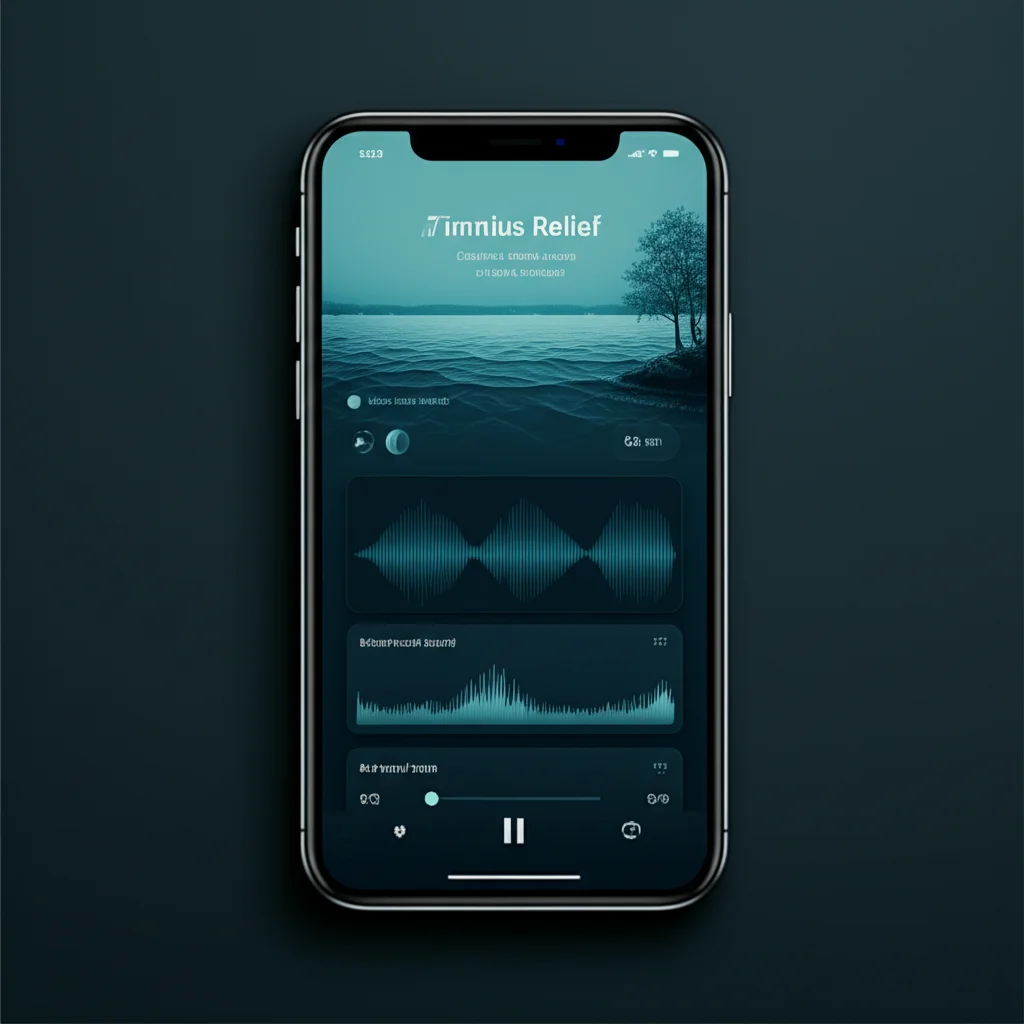
Key Takeaways
- 1Notch therapy apps target your specific tinnitus frequency for lasting relief, while masking apps only provide temporary coverage
- 2Frequency diagnostics are essential—know your tinnitus frequency before choosing a treatment
- 383% of users see improvement within 6 weeks when following a structured protocol
- 4Look for apps with real-time notch filtering, multiple sounds, and progress tracking
- 5Check the App Store for current pricing and features before downloading
What is a Tinnitus Relief App?
A tinnitus relief app is a mobile application that uses sound-based therapy to help reduce the perception and distress of tinnitus (ringing in the ears). These apps deliver specific audio treatments through your smartphone or headphones.
If you're among the 15-20% of people worldwide who experience tinnitus, you know how frustrating the constant ringing can be—especially at night when you're trying to sleep. Tinnitus apps offer an accessible, non-invasive way to find relief.
The best tinnitus apps don't just play random sounds. They use evidence-based approaches like notch therapy or structured sound masking to actually retrain how your brain processes the phantom sounds.
Types of Tinnitus Apps
Not all tinnitus apps work the same way. Understanding the different approaches helps you choose one that matches your goals.
Notch Therapy Apps
The most sophisticated option. They identify your specific tinnitus frequency and remove that exact frequency from therapeutic sounds. Your brain learns to "unlearn" the phantom sound. Learn more about notch therapy →
Sound Masking Apps
Play sounds that cover up your tinnitus. Effective for immediate relief, but doesn't address the underlying neural activity. Compare sound therapy options →
CBT-Based Apps
Focus on the emotional response to tinnitus with counseling modules and relaxation techniques. Often work best combined with sound therapy.
Key Features to Look For
✓ Frequency Diagnostic
Essential for notch therapy. Identify your tinnitus frequency before starting treatment.
✓ Real-Time Notch Filtering
Live DSP that filters your frequency in real-time, not pre-recorded sounds with fixed filters.
✓ Multiple Sound Options
At minimum: white noise, pink noise, and 3-5 nature sounds. Variety keeps therapy engaging.
✓ Sleep Timer
Critical for nighttime use with gradual fade-out to avoid sudden silence.
✓ Background Playback
Therapy should continue when your phone is locked or you're using other apps.
✓ Progress Tracking
Track session duration, streaks, and daily goals. Seeing progress motivates consistent use.
Tinnitus App Comparison
Here's how the leading tinnitus relief apps compare:
| App | Notch Therapy | Sounds | Diagnostic |
|---|---|---|---|
| Earpeace | ✓ Real-time DSP | 10+ | ✓ |
| MindEar | ✗ | 15+ | ✓ |
| ReSound Relief | ✗ Masking only | 20+ | ✗ |
| AudioNotch | ✓ | 5 | ✓ |
Our Take: For tonal tinnitus (the most common type), apps with real-time notch therapy like Earpeace or AudioNotch offer the best chance of lasting improvement.
How to Choose the Right Tinnitus App
Step 1: Identify Your Tinnitus Type
Tonal tinnitus (a specific ringing pitch) responds best to notch therapy. If your tinnitus is more like buzzing or pulsing, masking apps may work better.
Step 2: Test Your Frequency
Use a frequency matching feature to identify your tinnitus frequency. This takes about 5 minutes and gives you crucial information for choosing an app.
Step 3: Download and Get Started
Once you've found the right app, download from the App Store to get started with your personalized treatment.
Frequently Asked Questions
What is the most effective tinnitus app?+
Are tinnitus apps scientifically proven to work?+
How long should I use a tinnitus app each day?+
Do I need headphones for tinnitus apps?+
What's the difference between masking and notch therapy?+
Ready to Find Relief?
Identify your tinnitus frequency and start personalized notch therapy today. Available now on the App Store.
Download Now4.8★ rating on the App Store